Latest Entries
Mawwiage is what bwings us togeva today: How a simple snail intersects neuroscience and marine biology in exciting ways (Part I)
Guest Posts / How do we science? / Oddities in the Ocean / Science / Scientists in Action! / Technology

Mawwiage is what bwings us togeva today: How a simple snail intersects neuroscience and marine biology in exciting ways (Part I)

This post is part one of a series of guest post by Kevin Wolfe, a 2nd year PhD student at Texas A&M University- Corpus Christi, writer for Charged Magazine, co-founder of ScienceisFunnyFilms, and writer of funny Princess Bride related titles. I make my living torturing snails and playing with their brains.   It must seem … Continue reading

Film Friday: The Lionfish Invasion in Four Minutes
How do we science? / Marine Life / Podcasts and Videos / Scientists in Action!

Film Friday: The Lionfish Invasion in Four Minutes

Happy Film Friday! Some of the other UNdertheC bloggers and I have been taking a science communication class at UNC this semester. For our final project, we had to explain our research topics using a form of communication that was new to us. For my project, I chose to make a YouTube video explaining the … Continue reading

Darwin’s Paradise Lost
Guest Posts / How do we science? / Science / Scientists in Action! / Travel

Darwin’s Paradise Lost

Written by UNC Undergraduate Katie Overbey What do you think of when I say the Galápagos Islands? Maybe you think of a pristine, uninhabited, untouched natural habitat, populated with animals like the blue footed boobie and the Galápagos sea lion. Or you think of a tropical paradise with gorgeous beaches. Maybe it conjures up images … Continue reading

The time is now for alternative energy: can America go 100% renewable?
Energy / Energy, News, and Climate / Policy / Science / Technology

The time is now for alternative energy: can America go 100% renewable?

With the release of the most recent IPCC report, comes science-backed news that we have all been expecting. Climate change is occurring at an alarming rate and lifestyle changes must be made to avoid catastrophe. If you need confirmation of this, read the report, or this great story from the New York Times instead. The … Continue reading

Film Friday: Sea Turtle Release Day!
How do we science? / Marine Life / Podcasts and Videos / Policy / Science

Film Friday: Sea Turtle Release Day!

Scientists at The UNC Institute of Marine Sciences, the UNCW Center for Marine Science, the North Carolina Wildlife Commission, NC State CMAST, the National Parks Service, and the North Carolina Aquariums have been collaborating for quite a while to coordinate a sea turtle release. The day finally came last week, as members of the Peterson lab … Continue reading

MH 370 and the case for oceanic observation
Energy, News, and Climate / Science / Technology

MH 370 and the case for oceanic observation

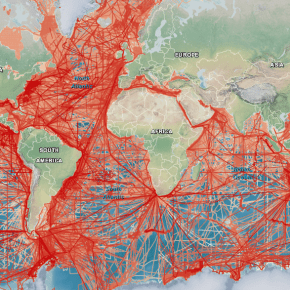
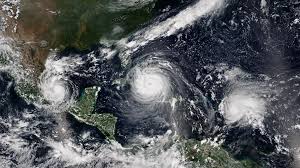
Despite the human race perceiving the seas as the ‘first frontier’ since the establishment of our species, NOAA estimates that 95% of the world’s oceans remain unexplored. From what you know of satellite capabilities and many of the resources you’ve seen on this very blog, this statement might be confusing and even unbelievable. But I … Continue reading

The Sci-Poetry of Sleeping Dinoflagellates
Oddities in the Ocean / Science / The HumanitSEAS

The Sci-Poetry of Sleeping Dinoflagellates

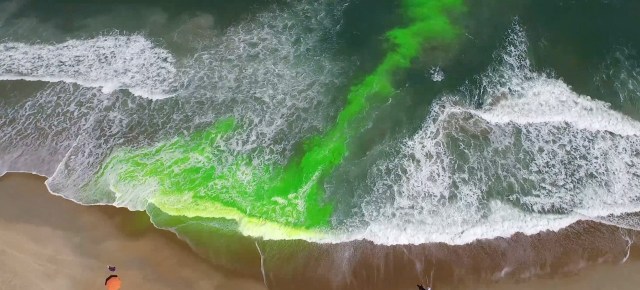
Dinoflagellate; the combination of the Greek δῖνος/dinos, “whirling” and Latin flagellum, “whip, scourge.”  I recently ran across a poem, written back in 2001 by a scientist named Mary Harrington who was in the midst of some phytoplankton research. She published her poem, transcribed below, in the Journal of Biological Rhythms. Science to follow! — FEEDBACK If the lazy dinoflagellate … Continue reading

Marine CookBook Entry #73: How to introduce jellyfish into your diet
Marine Life / Science

Marine CookBook Entry #73: How to introduce jellyfish into your diet

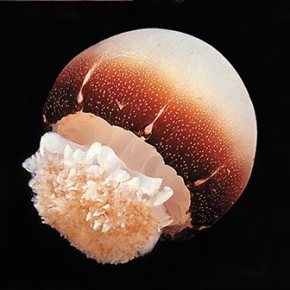
As we fish down the food chain, some of our traditional fisheries become less sustainable, while others (particularly the prey of species that we have overfished) seem to overrun certain parts of the ocean. Some fishermen turn to unconventional marine species as sources of sustenance for ever more demanding – and hungry – human populations. … Continue reading