Mawwiage is what bwings us togeva today: How a simple snail intersects neuroscience and marine biology in exciting ways (Part III)
Guest Posts / How do we science? / Oddities in the Ocean / Science / Scientists in Action!

Mawwiage is what bwings us togeva today: How a simple snail intersects neuroscience and marine biology in exciting ways (Part III)

This is the third and final installment of our guest blog by Kevin Wolfe, a PhD student at TAMUCC How marine science benefits by studying a simple brain   The biomedical benefits of studying Aplysia are fairly obvious; learning about the human brain is easy using a simpler analogue. Parkinson’s disease, post-traumatic stress disorder, and … Continue reading
Mawwiage is what bwings us togeva today: How a simple snail intersects neuroscience and marine biology in exciting ways (Part II)
Guest Posts / How do we science? / Oddities in the Ocean / Science / Scientists in Action! / Technology

Mawwiage is what bwings us togeva today: How a simple snail intersects neuroscience and marine biology in exciting ways (Part II)

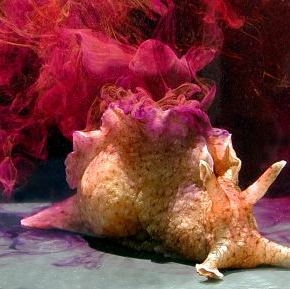
Part II of III in a series of guest posts by TAMUCC grad student Kevin Wolfe! How a marine snail became a cornerstone in learning and memory research I cannot emphasize enough how important Aplysia has been for the fields of learning and memory. Though the structure and function of the neuron itself was obtained … Continue reading

Can something in the ocean kill superbugs?
Guest Posts / How do we science? / Oddities in the Ocean / Science / Scientists in Action!

Can something in the ocean kill superbugs?

Today we have another guest post. This time from Maya, a fellow graduate student at UNC. Hello there, readers of UndertheC!! My name is Maya Nadimpalli, and I’m a PhD student in Environmental Microbiology at UNC’s School of Public Health. I’ve been taking a great Science Communication class this past semester with some of the … Continue reading

Mawwiage is what bwings us togeva today: How a simple snail intersects neuroscience and marine biology in exciting ways (Part I)
Guest Posts / How do we science? / Oddities in the Ocean / Science / Scientists in Action! / Technology

Mawwiage is what bwings us togeva today: How a simple snail intersects neuroscience and marine biology in exciting ways (Part I)

This post is part one of a series of guest post by Kevin Wolfe, a 2nd year PhD student at Texas A&M University- Corpus Christi, writer for Charged Magazine, co-founder of ScienceisFunnyFilms, and writer of funny Princess Bride related titles. I make my living torturing snails and playing with their brains.   It must seem … Continue reading

The Sci-Poetry of Sleeping Dinoflagellates
Oddities in the Ocean / Science / The HumanitSEAS

The Sci-Poetry of Sleeping Dinoflagellates

Dinoflagellate; the combination of the Greek δῖνος/dinos, “whirling” and Latin flagellum, “whip, scourge.”  I recently ran across a poem, written back in 2001 by a scientist named Mary Harrington who was in the midst of some phytoplankton research. She published her poem, transcribed below, in the Journal of Biological Rhythms. Science to follow! — FEEDBACK If the lazy dinoflagellate … Continue reading

Photography Friday: Happy Valentine’s Day
Oddities in the Ocean / Podcasts and Videos

Photography Friday: Happy Valentine’s Day

Happy Valentine’s Day! Can you spot all three marine organisms in this picture? Vase Sponge The heart in our Valentine’s Day photo is actually a uniquely-shaped vase sponge. These sponges are usually found on coral reefs and can be pink, purple, or even fluorescent blue. As members of the Porifera phylum, these organisms lack true … Continue reading

One Fish, Two Fish, Red Fish…Glowing Green Fish?
Energy, News, and Climate / Oddities in the Ocean / Science

One Fish, Two Fish, Red Fish…Glowing Green Fish?

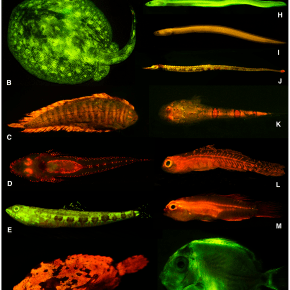
A few years ago, if I saw a cat with glowing green fur wandering around my yard, I’d assume that the poor animal had experienced radiation exposure that had left it eerily lit from within. After checking it for other superpowers and taking a few pictures (first things first, you know), I’d probably head online … Continue reading