This post is part one of a series of guest post by Kevin Wolfe, a 2nd year PhD student at Texas A&M University- Corpus Christi, writer for Charged Magazine, co-founder of ScienceisFunnyFilms, and writer of funny Princess Bride related titles. I make my living torturing snails and playing with their brains. It must seem … Continue reading
Category Archives: Technology
The time is now for alternative energy: can America go 100% renewable?
With the release of the most recent IPCC report, comes science-backed news that we have all been expecting. Climate change is occurring at an alarming rate and lifestyle changes must be made to avoid catastrophe. If you need confirmation of this, read the report, or this great story from the New York Times instead. The … Continue reading
MH 370 and the case for oceanic observation
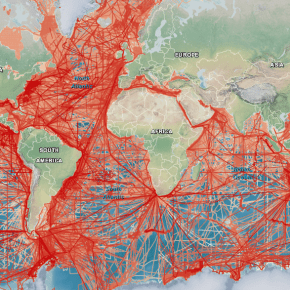
Despite the human race perceiving the seas as the ‘first frontier’ since the establishment of our species, NOAA estimates that 95% of the world’s oceans remain unexplored. From what you know of satellite capabilities and many of the resources you’ve seen on this very blog, this statement might be confusing and even unbelievable. But I … Continue reading
Ocean 180 video challenge– A great way to work on broader impacts and teach the world about your new paper!
Ocean 180 is an NSF funded initiative run by COSEE Florida (Florida Center for Ocean Science Excellence). You may know COSEE as the group who graded and recorded every student presentation at the Benthic Ecology Meeting this year (read my post about Benthics here). In short, these guys are awesome. They promote science communication and … Continue reading
NPR interviews Harvey Seim, and I tell you why what we’re doing is awesome
[audio http://cpa.ds.npr.org/pre/audio/2014/03/BUOYWINDENERGY-FINAL.mp3] Our department’s chair and my adviser, Harvey Seim, talks to NPR’s Jared Brumbaugh about our research into the offshore wind energy potential in North Carolina. In the next few days, we will be able to launch two buoys that have been down for repairs for almost a year or so. Harvey describes some of … Continue reading
Astro-Oceanographers and the Search for Titan’s Seas
I’m first and foremost a marine scientist, but I’m going to admit something to you all–I’ve kind of got a thing going on the side with astronomy. I’ve been furtively watching the revamped Cosmos (Haven’t seen the show yet? Screw reading this post–head over here and watch it!) and reading about new Big Bang breakthroughs … Continue reading
Starfish can grow their arms back. Can we?
When you were little, did you ever do that thing where you cut a worm in half because someone told you two new worms would grow from the parts? I did that thing. And it was the first of many somewhat morbid scientific disappointments in my childhood. It’s half true – the head half might … Continue reading
Wave energy conversion: the physics and the applications
Wave energy may be very important to the renewable energy industry as more traditional green energy sources meet more and more opposition in the political and economic arena. In this post, I’ll show you how ocean waves work, and some of the ways people have been attempting to harness wave energy for use by humans … Continue reading
Cetaceans react to sonic exploration
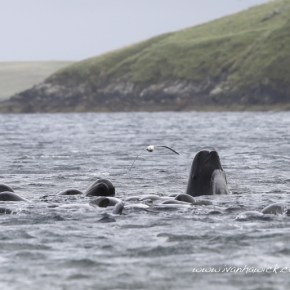
This article is in follow-up to Serena’s earlier post about NOAA’s emerging guidelines in marine mammal acoustic protection. As Serena noted, marine mammals, including cetaceans (whales, dolphins, and porpoises), are constantly communicating underwater using sound waves. Humans have also begun to use sound waves underwater to make processes of mapping the ocean floor easier and … Continue reading
Here’s a gust of new information about wind farm efficiency!
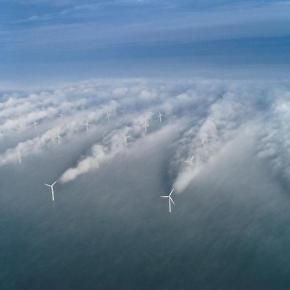
Everyone’s familiar with the ‘shading effect’ that occurs on solar energy schemes. If a tree or high rise building casts a shadow on your photovoltaic cell’s glass face, that means your system isn’t generating as much energy as it could, because it’s not catching as much sunlight as it could. But did you know that … Continue reading