Ocean 180 video challenge– A great way to work on broader impacts and teach the world about your new paper!
Policy / Science / Science and Communication / Technology

Ocean 180 video challenge– A great way to work on broader impacts and teach the world about your new paper!

Ocean 180 is an NSF funded initiative run by COSEE Florida (Florida Center for Ocean Science Excellence). You may know COSEE as the group who graded and recorded every student presentation at the Benthic Ecology Meeting this year (read my post about Benthics here). In short, these guys are awesome. They promote science communication and … Continue reading
Up All Night to Talk Climate: Senators stay #up4climate
Energy, News, and Climate / Policy / Science

Up All Night to Talk Climate: Senators stay #up4climate

On Monday night a group of U.S. Senators took to the chamber floor to give short speeches about climate change. The event, dubbed #up4climate, lasted all night. Who was in attendance? 30 Democratic senators and 2 Independent senators showed up to participate. Of the 45 Republican senators, a total of zero joined this movement. However, … Continue reading

#SciREN– Marine Scientists and Educators of North Carolina Join Forces
Policy / Science / Science and Communication / Travel

#SciREN– Marine Scientists and Educators of North Carolina Join Forces

If you follow us on Twitter, you have probably seen lots of content about #SciREN. If you weren’t at the workshop, let me tell you how it works. Marine scientists from North Carolina submitted lesson plans to the workshop and then met up at North Carolina Aquarium at Pine Knoll Shores (a great venue, by … Continue reading

Invisible technicians on the seven seas
How do we science? / Policy / The HumanitSEAS

Invisible technicians on the seven seas

Ships have an allure in oceanography.  Even the most misanthropic scientists become oddly affectionate when describing research vessels, whether those ships exist only in the misty memory of graduate studies or are used in ongoing fieldwork.  RVs are not simply a means of accessing offshore study locations, but provide the physical and mental space for … Continue reading

Bill Nye the Science Guy versus Ken Ham the Creation Man: Who Won the Debate?
Policy / Science and Communication

Bill Nye the Science Guy versus Ken Ham the Creation Man: Who Won the Debate?

Instead of doing my homework, last night I sat down and watched the entirety of the Bill Nye vs. Ken Ham debate/showdown. For those who avoided the whole thing, Bill Nye (a famous science educator) and Ken Ham (a Christian author who believes that Creationism should be taught in schools alongside evolution) agreed to meet … Continue reading

Photography Friday: Reef Degradation
Marine Preservation / Podcasts and Videos / Policy / Science

Photography Friday: Reef Degradation

An article posted late last night on the NYT website reports that the Great Barrier Reef Marine Park Authority, an independent Australian government agency whose purpose is to protect the Great Barrier Reef, has approved the dumping of 3 million cubic tons of sediment and dredging mud within the Great Barrier Reef Marine Park (a UNESCO … Continue reading

Shark cull in Western Australia: When policy laughs in the face of logic
Energy, News, and Climate / Policy / Science

Shark cull in Western Australia: When policy laughs in the face of logic

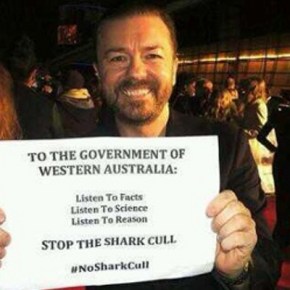
By now I’m sure you’ve heard that the government of Western Australia has decided to pursue a shark cull. The government supported program allows for the killing of sharks in Western Australian waters, including threatened Great Whites. There have been reports of people shooting sharks, but most of the culling will be done be baiting … Continue reading

Cetaceans react to sonic exploration
Marine Life / Policy / Science / Technology

Cetaceans react to sonic exploration

This article is in follow-up to Serena’s earlier post about NOAA’s emerging guidelines in marine mammal acoustic protection. As Serena noted, marine mammals, including cetaceans (whales, dolphins, and porpoises), are constantly communicating underwater using sound waves. Humans have also begun to use sound waves underwater to make processes of mapping the ocean floor easier and … Continue reading