A Nobel Prize winning biologist has announced a boycott of high impact journals such as Nature, Science, and Cell. When a Nobel Prize winner says something like that, people listen. The question is really whether or not that stance is well founded. Randy Shekman, the Nobel winner in question, is the editor of an open access … Continue reading
Author Archives: jbaumann3
Sneaky seahorses stalk prey using stealthy snout
Have you ever seen a seahorse swim? Maybe you haven’t, because they are always doing this: Anyway, they are not very fast swimmers because they have tiny fins that they must rapidly flutter in order to move. As a result they often attach to a substrate or just float in the water column. These guys have … Continue reading
Science during wartime: The effects of atomic bomb tests on biology, ecology, geology, and geochemistry
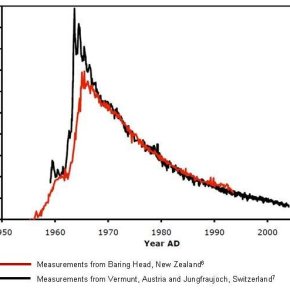
This Youtube video, originally posted about 3 years ago, has been making the rounds in the blogosphere as of late. It is frightening and incredible all at once. It acts as a history lesson, showing us who the players were in the arms race and even mirroring the ramp up and end of the cold … Continue reading
Photography Friday: Sea Slugs
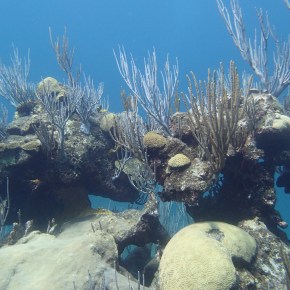
What is that yellow-spined thing? This is a species of sea slug, one of the strangest groups of organisms present on reefs worldwide. Sea slug is a pretty all encompassing term that includes groups such as Nudibranchs and Cephalaspidea. They are part of the “cryptic” fauna present on coral reefs. These interesting and strange creatures … Continue reading
How divers can make a difference
Joint post by Justin Baumann and Serena Hackerott The main goal of UNdertheC is to make science accessible and interesting to the general public. Recently, there has been a discussion on Coral List following a plea from a coral scientist for the diving industry to be more aware and active against threats to coral reefs. … Continue reading
The plight of the early career scientist (and grad student)
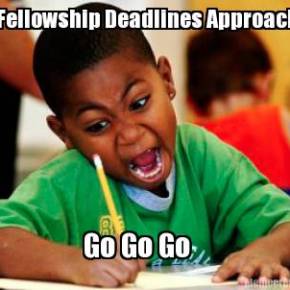
” How the world is failing at its climate goals” “Put the heat on subsidizing climate change” “Remember the government shutdown? It is still screwing over scientists in Antarctica” “Did climate change cause typhoon Haiyan?” These are just a few of the many headlines that have caught my eye over the past week. Everywhere I … Continue reading
Marine Monster Mash Part 2: Asian Carp
In honor of Halloween, we would like to highlight some marine “monsters.” These monsters are the most frightening type of all. They are taking over new regions, rapidly increasing in numbers, and eating everything in their paths. These species are… marine invaders. Carp aren’t scary are they? They are simply big, docile fish that feed on … Continue reading
Story telling in science? Is it valuable? The science says yes!
This recent article by Michael D. Jones discusses the merits of telling a good story. Right… So we know that already. What else do we already know? How about this: recent Gallup poll data reveal that only 57% of the American public believes that the main cause of global warming is human activity. Now, what if … Continue reading
Link Roundup: Week of October 21st
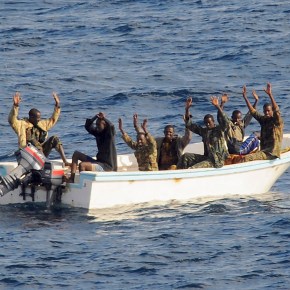
What role do Somali Pirates play in climate research: http://www.theatlantic.com/technology/archive/2013/10/how-somali-pirates-almost-but-not-quite-halted-vital-climate-change-research/280621/ Belize to monitor MPAs with aerial drones: http://amandala.com.bz/news/unmanned-aerial-drones-police-belizean-waters/ An old but cool segment on pristine reefs in cuba (featuring Anderson Cooper scuba diving): The new IPCC report (as seen in our business as usual” post: http://www.nytimes.com/interactive/2013/09/27/science/IPCC-report-summary.html?ref=earth&_r=0 What the government shutdown did to science: http://www.popularmechanics.com/science/health/med-tech/what-the-shutdown-did-to-science-16051793 Continue reading
Business as usual: the unacceptable model
According to a new paper published in “Nature” this month, under the “business as usual” scenario (no greenhouse gas regulation, IPCC), the average air temperature of most places on earth will be hotter than any recorded temperature at that location from 1860-2006 (link to the paper). This means that the average temperature will be greater … Continue reading